A Case For Community Solar Class Equities
By Gordon Matthews, PE
Presented on February 26, 2024
Community Solar is a remarkable tool to enable us to ‘electrify everything’ while insulating ratepayers from huge market-driven price spikes – and allows everyone who wants to can be a part of the solution and to benefit from their investments - if we get the details right.
Introduction
Our quest to decarbonize by electrifying everything, while essential, poses significant challenges to our current energy infrastructure and supply. Remarkable advances in wind and particularly solar energy technologies offer a solution, but the amount of these resources required - on a short timeline - is daunting. Since renewable costs are 'front-loaded' to build the infrastructure, this translates to a substantial new investment. The payback will also be substantial since once the renewables are generating, fuel costs disappear. The question facing us is how to finance these investments in our collective futures. Community Solar is a proven mechanism providing the upfront capital without finance costs in return for a viable return on investment (ROI) for community members (Subscribers) investing in their community.
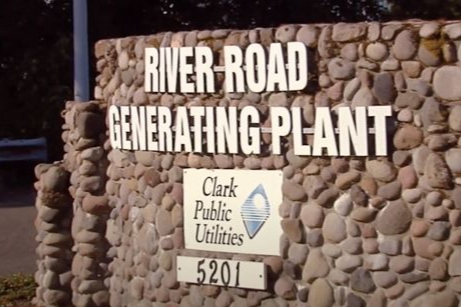
Community Solar investments, to the extent offered, are wildly popular. For example, five years ago, Clark PUD offered Community Solar Subscriptions through a 'bill-stuffer' to be conducted two weeks later, starting at 08:00. The entire initial subscription sold out within 4 minutes. After a short reconsideration, Clark PUD again opened their website for a 2nd equal amount that sold-out in 15 minutes! This past Fall, the East Vancouver Project was fully subscribed in 2 hours. Regrettably, there was a 5-year lag between the two projects.
The Subscriptions offer payback through bill reductions credited to the Subscribers electricity accounts. They offer a degree of portability to Customers, but only as long as the Customer remains within the Clark PUD Service Territory. For individuals moving outside of the Service Territory, their investments become a 'write-off'. We can change that, and we need to make the change.
Already, the Pacific Northwest is forecast to be in energy deficit, particularly in the Summer months due to HVAC adoption. While Solar is an intermittent resource, it is most assured to occur on hot, Summer days - by definition, when the Sun is shining. Looking more closely, our peak demand conditions typically resulting in high HVAC loads are the result of a 'static high-pressure cell setting up on the east-side of the Cascades'. Those conditions coincide with cloudless-skies - and no wind generation. Add to this the impending exponential increase in electricity demand from transportation electrification and local population growth, and we can see a crisis brewing.
One relatively simple change to existing statutory law will result in an equally robust increase in available solar energy:
Treat Community Solar investments the same way we do Equities, allowing Customers to recoup their principal investment when they leave the Service Territory.
Customer '1st Costs' (principal) protected.
Utility resale shields rate base.
Utility adds generation at virtually no cost.
Ratepayers avoid ~50% added costs for bonds and commercial finance.
Utilities Provide 'Backstop' Repurchase of 'Stranded' CSPV Investment
Community Solar offers a solid investment opportunity for residential Customers - as long as they remain within the Utility's Service Territory. Much like Rooftop Solar, if you move away, the investment becomes a right-off. This is the single downside to current Community Solar Photovoltaic (CSPV) offerings, and can be remedied simply: Establish a mechanism where the Utility is obligated to buy the CSPV Subscription from a departing Customer. While there will certainly be details to work through, in general the Utility purchases the CSPV array investment from the Customer at the initial purchase price(s) with an inflation adjustment similar to a COLA.
Consider the amount of money currently flowing to 'big oil'. All of that revenue is now poised to come to the utility industry. The daunting question is where will that new [energy] generation come from and how quickly can it be brought online?
CSPV Investments Avoid Cost of Rate-basing New (Renewables) Generation
This is not a 'subsidy' born by the Utility, but rather a cost of doing business - well. As we move to 'electrify everything' we are going to need more electricity, particularly to accommodate the substantial new loads coming into the market for electricity from transportation. Consider this: One Gallon of gasoline represents 33.1kWh of energy. Now consider the sheer volume of fossil fuel sales we need to curtail. This is a remarkable opportunity for the electric utility industry filled with challenges - and benefits. Also consider the amount of money currently flowing to 'big oil'. All of that revenue is now poised to come to the utility industry. The daunting question is where will that new [energy] generation come from and how quickly can it be brought online?
Traditionally, Utilities go to the commercial financial markets to raise funding and issue Bonds to build the power plants needed. These were for major resources designed to serve for decades. In the era of Renewables, this means purchasing a PV Plant from a commercial developer and incurring the 'cost of capital' to roll into the Rate Base. By aggressively offering CSPV, the capital cost disappears: the Utility is acquiring the funding from its own Customers at no upfront cost of capital.
In addition, CSPV gives the Utility a tool to manage their system. While Roof-Top PV (RTPV) may seem like it supports our essential move to Renewables, it actually adds to the chaos. Since a Utility has no visibility on the instantaneous output of a RTPV Array, or if it is even operational. CSPV aggregates what effectively amounts to many rooftops of solar behind a single meter represents significant capacity, warranting a SCADA point. This visibility facilitates Utility operator resource management as well as potential surplus to push into the Market. A single, consolidated, large array also offers an efficient platform to deploy and manage large-scale storage resources as these become commercially viable.
The participating Customer derives the benefits of the monthly 'dividends' by seeing a credit against their electricity usage. By instituting a mechanism where a Customer can be 'bought out' by the Utility if they leave the Service Territory, their Principal is preserved. The Utility can then opt to either retain ownership of those shares or to resell to new Customers as they move into their Service Territory. This makes CSPV a smart, secure investment for Customer’s future – and for their community.
This mechanism also benefits the other Customers on the System choosing not to invest in the CSPV. The Utility is adding generation to their portfolio without incurring the substantial cost of Capital. Even if the Panels purchased by a Customer are ultimately purchased by the Utility if the Customer departs, these purchases are gradual and when added to the Rates result in marginal increases: far less than conventional financing. In addition, the continuous operation and maintenance of the CSPV Array warrants a modest Utility service charge to cover maintenance and Panel replacement, ensuring the Array performs to expectations.
CSPV is also egalitarian: any Clark PUD Customer can participate. Participation doesn’t require a suitably oriented, shade-free roof. It also affords financial flexibility: Customers can buy any number of panels, including ‘fractional panels’, allowing all to participate.
Not only is this more egalitarian, it is a better value for everyone. CSPV projects produce 140% of the Solar generation compared to RTPV due to the economies of scale and eliminating the need for customized engineering solutions to install. It also provides a rationale to reduce or eliminate the ‘postage-stamp rate’ rebates to RTPV Customers: everyone can participate in CSPV and all participants share in the financial returns both from monthly ‘dividends’ based on generation and through avoiding substantial rate increases to secure new, dispatchable and predictable generation.
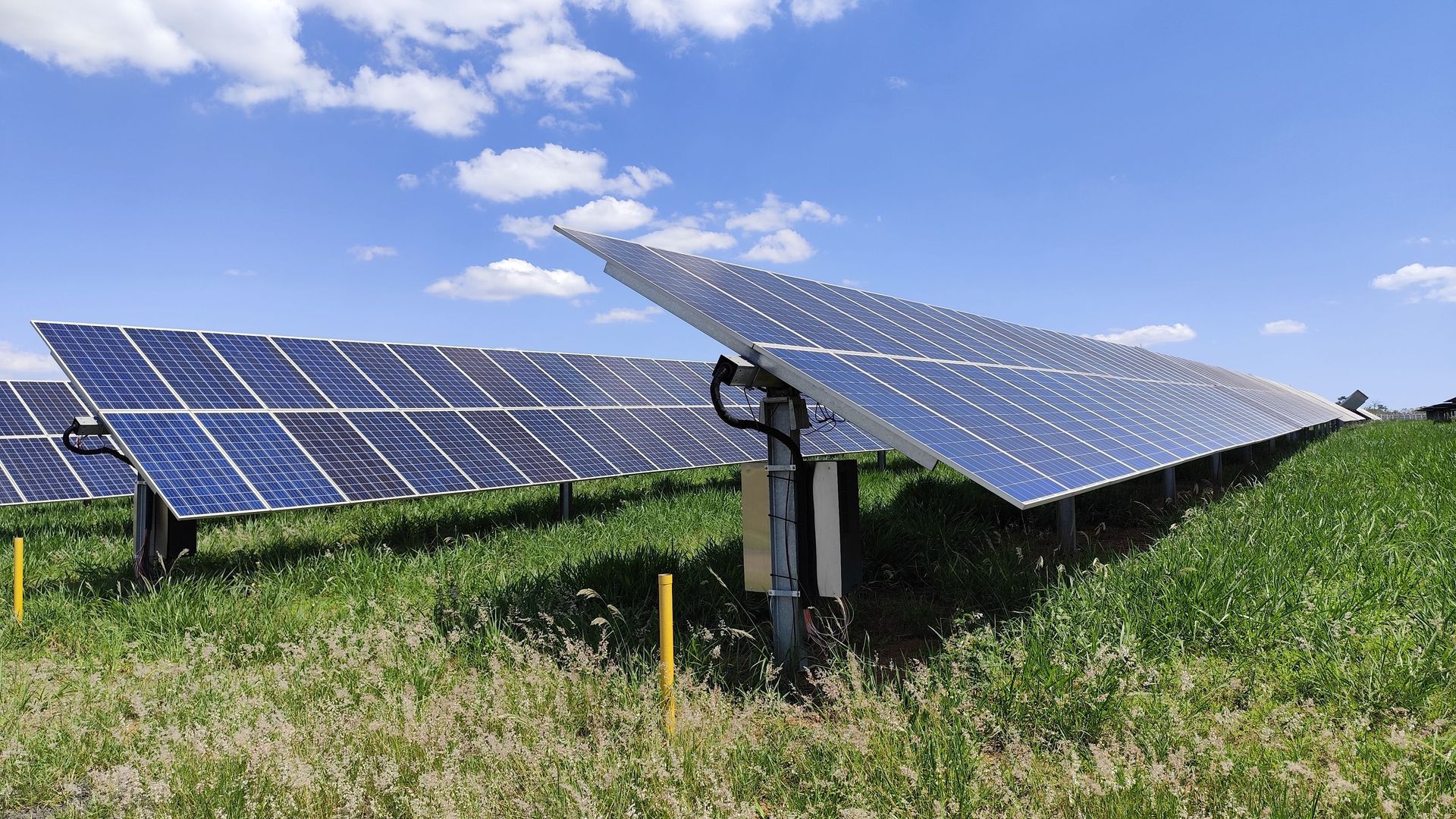
To make CSPV continually available, Utilities need to obtain title to large tracts of developable properties, preferably on the east-side of the Cascades with 350-days of clear skies, annually. This opens the door to new Customer options such as adding to their CSPV investment as a monthly billing. While most Customers likely do not have thousands of dollars to invest in a lump-sum, everyone could elect to purchase CSPV Shares in monthly increments ranging from $1 or more. ‘Fractional Shares’ of Panels add up, allowing Utilities to continually add generation for the foreseeable future

State Government Effectively Controls Utilities through Regulation
WA State hosts many Public Utilities. These are technically not under State jurisdiction, rather their elected Commissioners. The Washington PUD Association is perhaps the best venue to promote adding large quantities of CSPV for its members. It is a truly a win-win for all parties: Their Customers secure a conservative investment tool, complete with both monthly 'dividend' and protection for their ‘principal’ while Utilities access a 'free' source of funding to increase their generation portfolio. Non-participating members are protected from Rate increases.
One relatively simple change to existing statutory law will result in an equally robust increase in available solar energy: Treat Community Solar investments the same way we do Equities.
January 2024: This Changes Everything
In January 2024, the Biden Administration directed the Bureau of Land Management (BLM) to make 22 million acres of Federal Lands within 10 miles of existing Transmission infrastructure available for Solar Development. This presents an extraordinary opportunity for Washington Public Power. In broad terms, areas in Washington east of the Cascades can expect an average of 4kWh/m2/Day. This translates to 10MWh per sq. mile per day of available incident solar radiation. Consider a scenario where Washington Public Power secured (at no cost) a 10 square mile plot as a ‘solar preserve’, say adjacent to the BPA Harvalum Substation adjacent to John Day Dam. Each Public utility could then develop tracts or individual Racks on the Preserve as continued Subscriptions allow, sharing a common Transmission Interconnection. Fully developing this 10 square mile example could represent as much as 30MWh/day to serve load.

Acquiring property to host a Solar Array has delayed Utilities from offering Subscription opportunities for years at a time. By securing title to a large ‘solar preserve’, Utilities can make Community Solar Subscriptions an open window until sufficient generation is built to meet our growing loads and climate challenges. Ratepayers could be offered a ‘monthly purchase’ rider on their bills: While many can’t afford a multi-thousand-dollar one time investment, they could afford to buy $10 of solar a month. This also becomes a secure and safe investment opportunity for ratepayers to invest for their future as well as invest in their community today!
This amount of controllable, dispatchable power, once fully developed, would eliminate the need for Washington Utilities to depend on the market to meet peak demands and insulate ratepayers from prices orders of magnitude higher for energy.
A major policy advantage of this strategy is to revoke the current incentives provided for the installation of residential rooftop PV. This current incentive inordinately reimburses participating residential customers while also significantly complicating operation of the distribution system. Instead, the Utility can offer as much solar investment to members (Customers) to purchase ‘shares’ in the expanded Community Solar program. Note this represents a significant investment advantage to all Utility members and for the same dollar invested, the Member can purchase 140% of actual solar PV panels.
Community Solar is a remarkable tool to enable us to ‘electrify everything’ while insulating ratepayers from huge market-driven price spikes – and allows everyone who wants to can be a part of the solution and to benefit from their investments - if we get the details right.
quote
title
copy
Recent Posts