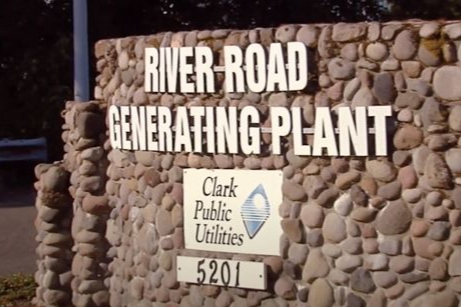
Clark PUD owns and operates a combined-cycle gas turbine electricity generating plant on River Road in Vancouver, WA. The River Road Generating Plant (RRGP) is vital resource producing 250MW of electricity when operating. The plant is fueled with methane and it produces substantial amounts of carbon pollution in the form of the greenhouse gas, carbon dioxide (CO2). The Washington State Climate Commitment Act (CCA) requires Clark to begin limiting operation in 2030, progressively ramping down operation to a complete shut-down in 2045. That will be a significant loss to our available sources of electricity and will also be a significant financial loss to Clark. There is an opportunity to extend the use of the plant, and amortizing our investment far into the future: utilizing surplus state-wide renewable generation from the spring to produce and store hydrogen to fuel the plant in periods when sufficient primary renewable energy is not available in the winter months.

Our quest to decarbonize by electrifying everything, while essential, poses significant challenges to our current energy infrastructure and supply. Remarkable advances in wind and particularly solar energy technologies offer a solution, but the amount of these resources required - on a short timeline - is daunting. Since renewable costs are 'front-loaded' to build the infrastructure, this translates to a substantial new investment. The payback will also be substantial since once the renewables are generating, fuel costs disappear. The question facing us is how to finance these investments in our collective futures. Community Solar is a proven mechanism providing the upfront capital without finance costs in return for a viable return on investment (ROI) for community members (Subscribers) investing in their community. Community Solar investments, to the extent offered, are wildly popular. For example, five years ago, Clark PUD offered Community Solar Subscriptions through a 'bill-stuffer' to be conducted two weeks later, starting at 08:00. The entire initial subscription sold out within 4 minutes. After a short reconsideration, Clark PUD again opened their website for a 2nd equal amount that sold-out in 15 minutes! This past Fall, the East Vancouver Project was fully subscribed in 2 hours. Regrettably, there was a 5-year lag between the two projects. The Subscriptions offer payback through bill reductions credited to the Subscribers electricity accounts. They offer a degree of portability to Customers, but only as long as the Customer remains within the Clark PUD Service Territory. For individuals moving outside of the Service Territory, their investments become a 'write-off'. We can change that, and we need to make the change. Already, the Pacific Northwest is forecast to be in energy deficit, particularly in the Summer months due to HVAC adoption. While Solar is an intermittent resource, it is most assured to occur on hot, Summer days - by definition, when the Sun is shining. Looking more closely, our peak demand conditions typically resulting in high HVAC loads are the result of a 'static high-pressure cell setting up on the east-side of the Cascades'. Those conditions coincide with cloudless-skies - and no wind generation. Add to this the impending exponential increase in electricity demand from transportation electrification and local population growth, and we can see a crisis brewing. One relatively simple change to existing statutory law will result in an equally robust increase in available solar energy: Treat Community Solar investments the same way we do Equities, allowing Customers to recoup their principal investment when they leave the Service Territory.